
We all know that tile floors are easier to clean than other types of floors. You can clean them very clean with a mop. However, in the long run, the tile floor will also lack a layer of maintenance. The floor will become unsightly and lose luster. It will need to be renovated over time. Secondly, if the area is large, using a mop will be time-consuming and labor-intensive. Furthermore, mopping the floor will leave some residual moisture on the ground, so it cannot be put into use immediately.
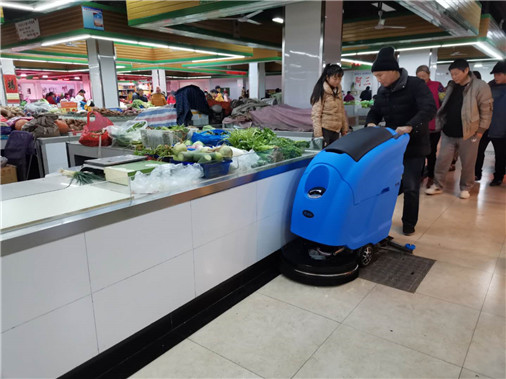
Combining these three points, mechanization and intelligence have replaced manual operations. Mechanism, which means fully automatic floor washing machines, can well solve the above problems. Not only can it be used for various large areas, but it can also be used for low-speed polishing during cleaning. For large-area places, you can choose a fully automatic driving floor washer, such as shopping mall cleaning; for small-area places, you can choose a fully automatic hand-push floor washer, such as a hotel lobby.
The fully automatic floor washer is a machine that can spray water, brush the floor, and suck dry at the same time. But how does the fully automatic floor washer clean the tile floor? The editor of YOUNISI floor washing machine will give you a brief introduction below. The fully automatic floor washing machine has two washing modes. One is to install a floor scrubbing brush to scrub the floor, and the other is to install a needle seat and a scouring pad to scrub the floor paint.
How to use a fully automatic floor scrubber to clean tile floors? First, add an appropriate amount of water and detergent according to the area of the tile floor. If the dirt on the floor is serious, we recommend using a brush to clean it, because there are gaps between the bricks. Cleaning with a brush can ensure that each tile and the gaps between the bricks can be cleaned very clean.
Then turn on the power of the floor washing machine, put down the squeegee and brush tray, turn on the brush tray motor switch and water suction motor switch, adjust the water release valve, and control the floor washing machine to move forward and wash the floor.
In some gaps between ceramic tiles, it may not be possible to clean them by absorbing water. At this time, you should check whether there are some small garbage such as sand, gravel, hair, etc. on the water-absorbing strips. Clean up the garbage in time, and repeat the suction several times to suck up the sewage.
Every time after cleaning the floor, the water in the sewage tank should be drained, and the sewage suction and discharge pipes should be cleaned in time to prevent blockage. Then put the machine in a ventilated place and put away the brush plate and squeegee. If the battery runs out, recharge the floor washer in time to ensure the orderly progress of the next cleaning work.