
A long time ago, the editor of YOUNISI wrote an article on the care and maintenance of a hand-push floor scrubber. The content inside is very detailed. If you haven’t seen it, you can look it up in my records. So today let’s talk about the care and maintenance of the ride-on floor scrubber.
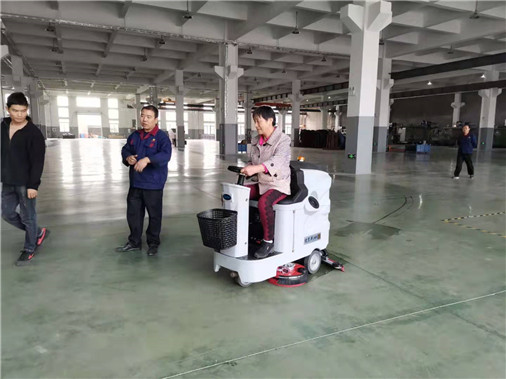
The use of ride-on floor scrubbers requires regular maintenance. Routine maintenance is very important for ride-on floor washers, otherwise it will affect its service life. As a popular cleaning equipment at the moment, ride-on floor washers are no exception. Especially machines that use water, such as battery-type floor scrubbers, require simple maintenance and upkeep every day or after completing the cleaning task.
The ride-on floor washer is mainly composed of two parts: a sewage tank and a clean water tank. The editor of YOUNISI Cleaning Equipment hopes to help everyone do a good job in cleaning and maintenance of the ride-on floor washer, and provides the following four points for attention:
1. Empty and clean the sewage tank. During the operation of the machine, a large amount of water mixture containing sludge will be absorbed, which can easily accumulate in the water tank and emit an unpleasant smell. Therefore it is very necessary to clean the water tank with running water.
2. Remember to empty the water tank of the automatic floor scrubber. Especially not when cleaning operations are performed every day, otherwise stagnant water will become a source of bacteria and so on. Water leakage may also occur due to incorrect operation, causing unnecessary losses (such as burning the motor).
3. Check whether the squeegee of the battery floor scrubber is clean and clean the water-absorbing filter. Clogging of either the squeegee strip or the water-absorbing filter will weaken the water-absorbing effect. The strips and filter need to be cleaned with flowing water.
4. Check the wear of the brush plate and squeegee of the fully automatic floor scrubber once a week. If the ground has high friction, strong pressure on the ground will damage these accessories or cause them to wear faster. Under normal circumstances, the average service life of the brush plate and rubber strip is 4-6 months, but it mainly depends on the roughness of the ground and the frequency of use.
The above four points mainly talk about the care and maintenance of wearing parts (brush trays and water-absorbent strips), especially the maintenance of the sewage tank. After cleaning, the sewage tank must be cleaned in time (especially in summer). In winter, especially in the north, not only the sewage tank must be cleaned, but also the water left in the clean water tank must be drained to prevent the water from freezing when cleaning the next day. After completing these tasks, remember to fully charge the machine and place it in a cool and dry place.