
The floor washing machine will inevitably break down, so we can't rush at this time. By troubleshooting step by step, you can solve small problems by yourself. If you cannot solve the problem, you will at least know where the problem lies. You can also locate the problem by reporting it to the manufacturer. There are at least two motors on a floor scrubber, one is the brush motor and the other is the water suction motor. If it is a self-propelled hand-push floor washing machine and a driving floor washing machine, there will be an additional drive motor. If the brush plate and strip bracket are lifted electrically, an additional lifting motor will be required. So what are the common faults of these motors? What are the solutions? Here is a brief answer for you.
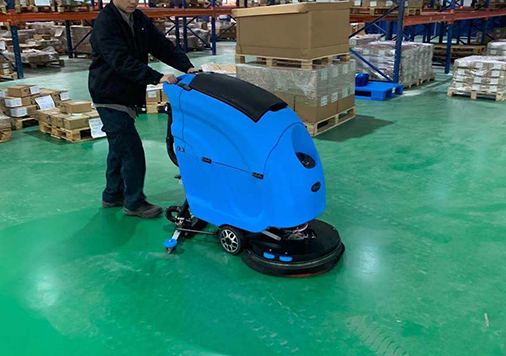
1. The floor washing machine cannot walk in a straight line:
The pressure on the brush disk of the floor washer is not enough. You need to adjust the pressure on the brush disk of the floor washer. The cleaning effect of the floor washer is uneven. Check whether the brush disk or scouring pad of the floor washer is worn and replace the worn parts.
2. The floor washing machine cannot operate:
The first step is to confirm whether the power supply is connected properly (for battery-type floor scrubbers, check whether the battery and machine are connected properly; for power-type floor scrubbers, check whether the plug is connected to the power strip and whether the power strip has power. This point is easily overlooked. Is there insufficient power to provide the voltage required for the floor scrubber to work?
3. The water suction motor of the floor washing machine does not work:
1. Check whether the switch of the suction pump of the floor washing machine is turned on. Check whether the switch on the panel of the floor washing machine is turned on. The battery of the floor scrubber is exhausted and needs to be recharged.
2. Check whether the power cord of the water suction motor of the floor washing machine is properly connected.
3. The water suction motor of the floor washing machine is damaged. Replace the water suction motor. The fuse of the floor washing machine motor is burned out. Find the cause and replace it with a new fuse.
4. The sewage tank of the floor washing machine is full and the sewage is discharged.
4. Floor washing machine battery series problems:
1. The battery usage time is shorter than normal.
2. Check whether the battery charger and battery are damaged and replace the corresponding accessories.
3. If it is not a maintenance-free battery, you need to check whether the electrolyte is easily insufficient. If so, add distilled water.
4. Check whether the electrodes and wiring terminals are oxidized or have dirt, and scrape off the oxidized parts.
5. The battery is fully charged and the effective use time is short.
6. The floor washing operation area is too large and the capacity of the current distribution battery is insufficient. Contact the manufacturer to replace the large-capacity battery or use a spare battery.
7. After charging is completed, the battery cannot provide normal voltage. Read the instructions and make sure the battery is correctly connected to the charger.
8. Is it a new battery? YOUNISI floor scrubber tells you that the new battery cannot perform 100% and needs to be charged and discharged more than 20 times to achieve full performance.
5. The brush plate of the floor washing machine cannot rotate:
1. The brush plate motor of the floor washing machine overheats and shuts down or the floor washing machine motor is overloaded. At this time, you need to turn off the floor washing machine motor switch and let it cool for 45 minutes before using it again.
2. Is the brush plate switch of the floor washing machine in the on position? Check whether the switch on the control panel of the floor washing machine is turned on. The battery of the floor scrubber is exhausted and needs to be recharged.
3. The gear box of the floor washing machine is damaged and needs to be replaced. The motor of the floor washing machine is damaged and needs to be replaced. The motor fuse is burned out. Replace the fuse after finding the cause.
4. Are the floor washing machine motor power wiring and overheat protection connected properly? If not, they need to be connected.
5. The water in the clean water tank of the floor washing machine is insufficient. Inject clean water.
6. The floor washing machine does not absorb water well:
1. The water suction pipe or air suction inlet is blocked or damaged. Clean or replace relevant parts as appropriate.
2. The float valve switch of the sewage tank fails or the sewage is full. Replace the float valve or drain the sewage.
3. The water-absorbing strip is worn and needs to be replaced; the water-absorbing pipe is not connected or damaged, connect it or replace it; the water-absorbing motor is faulty and needs to be replaced.
7. The floor washing machine does not discharge water from the brush plate:
1. The clean water tank ball valve is damaged and needs to be replaced.
2. The water release switch is not turned on and needs to be turned on.
3. The fresh water tank is insufficient and needs to be filled with fresh water.
4. The water outlet pipe is blocked. Clean the water outlet pipe. If the water outlet filter is clogged, clean or replace the water outlet filter.
The above are the seven major troubleshooting methods for floor washing machine motors. Although the content is a bit long, it is still very simple to read carefully. If you encounter similar problems during use, follow these troubleshooting methods and your work efficiency will also improve a lot.