
The driving floor scrubber can solve many cleaning problems in enterprises, shopping malls and other places. Its cleaning efficiency and comfortable working method have been favored by consumers. More and more cleaning units are beginning to use driving floor scrubbers, but the editor found that many consumers often encounter unexpected situations during use due to insufficient understanding of the floor scrubbers. Today I will briefly analyze this situation.
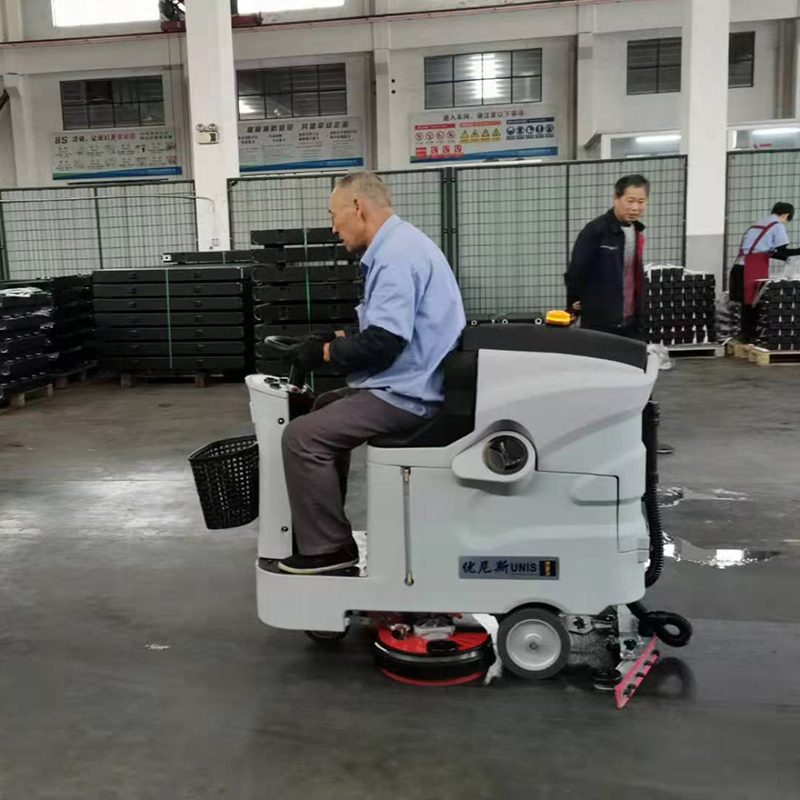
Listed below are some examples of problems you may encounter, along with solutions:
1. The ride-on floor washing machine cannot operate
(1) The battery is not connected: install a battery to the machine
(2) The battery is exhausted: charge the battery
(3) The emergency button is pressed: Release the emergency button
2. The floor washing brush of the driving floor washing machine does not rotate.
(1) The brush switch is not pressed: Press the brush switch
(2) The sewage tank is full: empty the sewage tank
(3) The brush motor fuse is burned out: Check and replace the fuse
(4) The battery is exhausted: charge the battery
(5) Motor failure: replace the motor
(6) Poor cleaning effect: the brush or scouring pad is worn and replaced.
3. No clean water flows out of the ride-on floor washer
(1) Close the water outlet valve: open the water outlet valve
(2) There is insufficient water in the clean water tank: add water to the water tank
(3) The water outlet pipe is blocked: remove the blockage
4. The water flow of the ride-on floor washing machine cannot be stopped and water cannot be discharged during operation.
(1) The solenoid valve is blocked: Check the solenoid valve
(2) The solenoid valve is damaged: Replace the solenoid valve
(3) Solenoid valve circuit failure: Check the solenoid valve circuit
5. The water suction motor of the ride-on floor scrubber cannot be started.
(1) The water-absorbent strip has been worn: replace it
(2) The water suction pipe or air suction inlet is blocked or damaged: remove the blockage or replace the water suction pipe
(3) The float sensor switch fails or is full of water: empty the sewage tank or replace the float switch
(4) The suction pipe is blocked: remove the blockage
(5) The water suction pipe is not connected or the water suction pipe is damaged: Connect or replace the water suction pipe.
(6) There is no power supply to the water suction motor or the motor is faulty: please check whether the power cable is connected correctly. If it is the latter case, please replace the motor.
6. The ride-on floor washing machine cannot move
(1) The battery is exhausted: charge the battery
(2) There may be problems with the walking control part: check the manual or contact after-sales personnel
(3) The emergency button is pressed: Release the emergency button
7. The ride-on floor washing machine cannot brake.
The control lever of the electronic brake system is locked: loosen the control nut
8. The battery life of the ride-on floor scrubber is shorter than normal.
The electrodes and terminals are oxidized or dirty: clean and apply Vaseline on the electrodes and terminals
9. The battery life of the ride-on floor scrubber is shorter than normal.
(1) Insufficient electrolyte capacity: Add distilled water and add water to each cell according to the instructions:
(2) The battery charger is not working properly: check the charger instructions
(3) The battery cell is damaged: replace the battery
10. The battery of the ride-on floor scrubber is fully charged normally, but the use time is very short.
(1) The battery is new, but it cannot provide 100% performance: usually a new battery needs 20-30 times of charging and discharging to achieve the best use effect.
(2) The machine needs to be used continuously and the battery capacity is insufficient: replace the battery with a larger capacity or use another set of charged batteries.
(3) The electrolyte is insufficient and the electrode plate is not completely immersed: add distilled water and recharge.