
Industrial vacuum cleaner (English: industrial vacuum cleaner) is a device used to collect waste, filter and purify air, and clean the environment during industrial production. Industrial vacuum cleaners can absorb various types of metal, non-metal, oil, water and other particulate dirt and liquids, and can absorb and purify toxic and harmful gases. They can improve the quality of products in the textile industry, and can recycle some expensive catalysts in the chemical industry. As an environmentally friendly equipment, industrial vacuum cleaners can effectively prevent the harm of some occupational diseases, such as welder pneumoconiosis, shoe factory leukemia, etc.
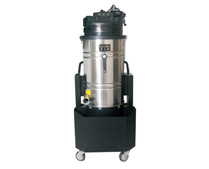
Compared with household vacuum cleaners, industrial vacuum cleaners have the advantages of continuous use for 24 hours, strong suction, large dust storage capacity, long service life, and high temperature resistance. The chassis shell and trash can are made of steel or iron plates with standard thickness, which can effectively protect the motor part from damage. In particular, industrial vacuum cleaners have almost no requirements for the suction objects, and can absorb waste media of various materials and shapes. By replacing different filter media, such as filter elements, filter bags, etc., it can absorb solid particles above 0.3 microns with an accuracy of 99%, and can be used in fine chemicals, precision machinery and other industries.
Industrial vacuum cleaners use turbine fans, venturi tubes and other equipment to evacuate the inside of the barrel, causing the negative pressure to rise rapidly. The high negative pressure causes the air to quickly flow into the barrel through the air inlet. The barrel passes through the vacuum brush and vacuum tube. The flowing air carries the solid particles that need to be collected and processed into the barrel. The filter bag and the inlet The air vents are connected, and the solids are attached to the inner surface of the filter bag. The initially filtered air passes through the gaps in the filter bag, and is filtered twice by the filter element to make the air meet the emission standard. The filtered air enters the exhaust duct through the exhaust port of the fan, and is finally discharged back to the interior of the workshop to reduce energy, especially heat energy loss. The higher the negative pressure, the stronger the suction power, and the wider the diameter of the suction port, the flow rate increases, the corresponding negative pressure becomes smaller, and the suction power becomes smaller. By selecting the appropriate model, the negative pressure can be maintained within a constant range to adapt to the suction and processing of different materials. industrial vacuum cleaner