
[Introduction] How to properly clean and maintain epoxy floors with floor scrubbers.
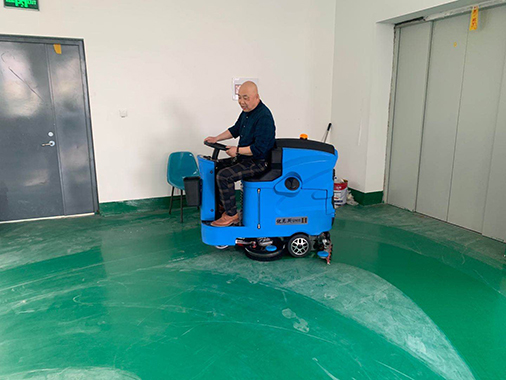
Epoxy flooring is currently widely used in domestic applications, from industrial floors to commercial applications in public places, shopping malls, and schools. Epoxy flooring is not only inherently wear-resistant, pressure-resistant, dust-proof, easy to clean, mildew-proof, waterproof, and anti-corrosion, but it can also bring a beautiful and novel working environment. However, construction is expensive, so later cleaning and maintenance will help extend the service life of the floor, reduce the renovation rate, and ensure the smooth progress of production. The maintenance of the floor is as important as the maintenance of the equipment.
When vehicles, forklifts, forklifts, and staff enter and leave the production workshop, it is easy to bring in sand, dust, and oil from the outside and carry it to every corner of the entire workshop. Manual cleaning is not only inefficient and takes a long time, but also wastes a lot of effective human resources. Unclean cleaning affects the working environment and causes large-scale wear and tear on the epoxy floor. It is well known that floor washers are cleaning experts. Nowadays, in many places, cleaning staff can be seen pushing or driving floor washers to clean the floor. However, you need to follow some precautions when using a floor washing machine to clean and maintain it correctly:
1. Epoxy floors are relatively delicate, so when cleaning with a floor washing machine, you generally need to use a soft brush disk and a scouring pad.
2. When there is only ordinary garbage and dust in parking lots, stores, and workshops, the floor washing machine should be equipped with neutral detergent for cleaning.
3. Sometimes parking lots and textile workshops will bring some gravel or even metal shavings and other garbage due to the circulation of people, so they should be cleaned with a floor washing machine before cleaning and drying.
4. When the epoxy floor is oily, it is necessary to use a powerful oil agent to assist the floor washer for cleaning. However, when cleaning, pay attention to appropriately adjusting the pressure of the brush to protect the ground.
5. After cleaning the floor washer, the squeegee and brush plate should be cleaned, the sewage and remaining detergent should be poured out, rinsed and air-dried, and then put away and charged.
When properly cleaned and maintained, epoxy floors can provide a beautiful environment, extend their lifespan, and reduce exterior damage and sanding. Reasonable use of a floor washer for cleaning can not only effectively clean and protect the floor, but also save cleaning time and labor. Moreover, the effect of cleaning with a floor washer is very good, uses less water, is safe and convenient.